Harriet and Helena Scott, the artist naturalists of Ash Island
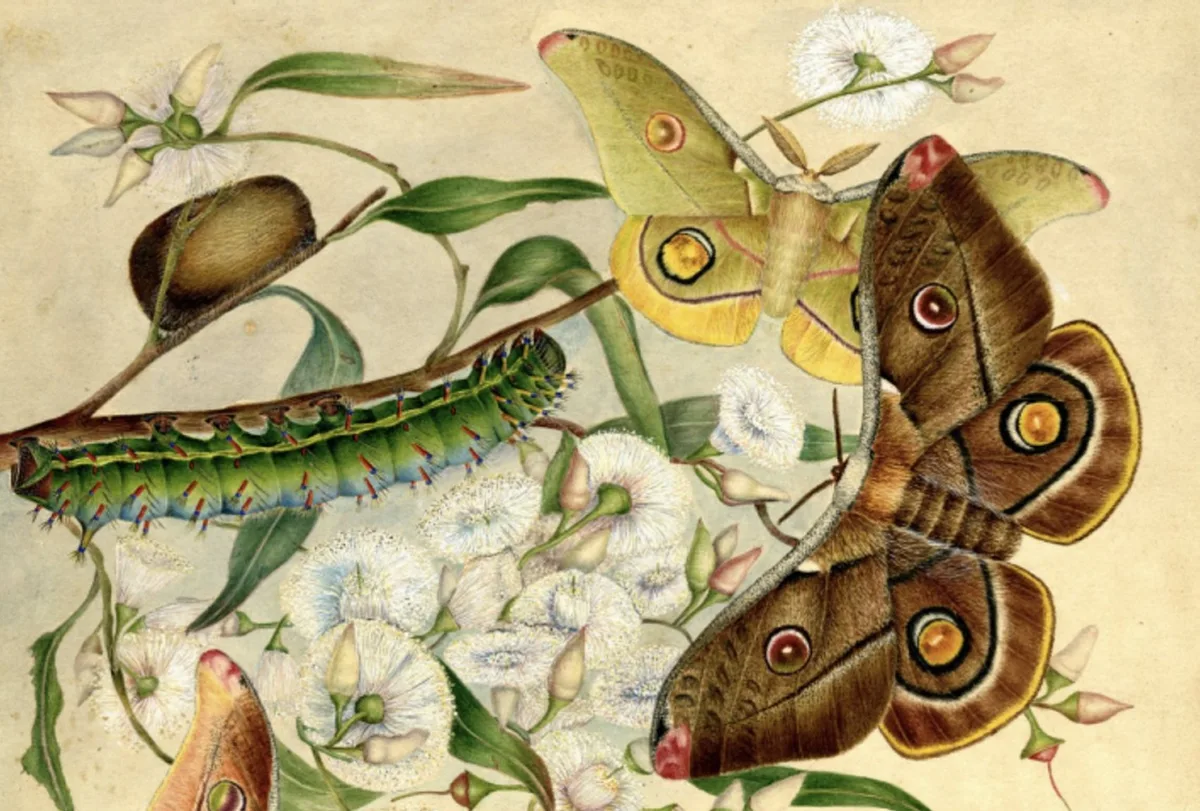
Every plate the sisters painted is signed the same way: From Nature and On Stone. From nature, because the moth, its host plant, its caterpillar and its pupa were all raised, watched and drawn here on this island. On stone, because they then drew it all again, in reverse, on lithographic stone for printing. This page reads one plate the way they painted it.
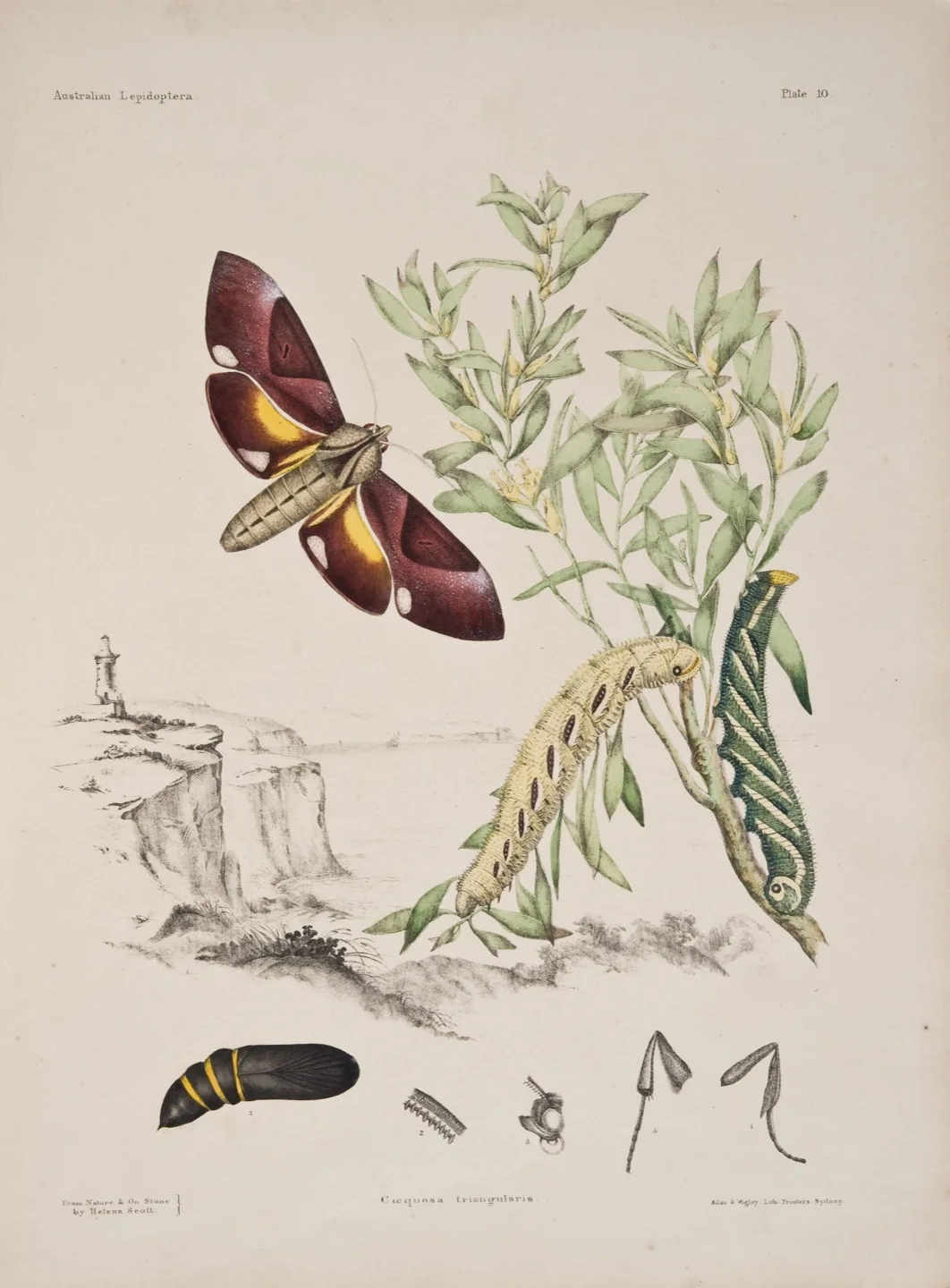
“From Nature & On Stone by Helena Scott” · Allan & Wigley, Lith. Printers, Sydney · published 1864
The moth
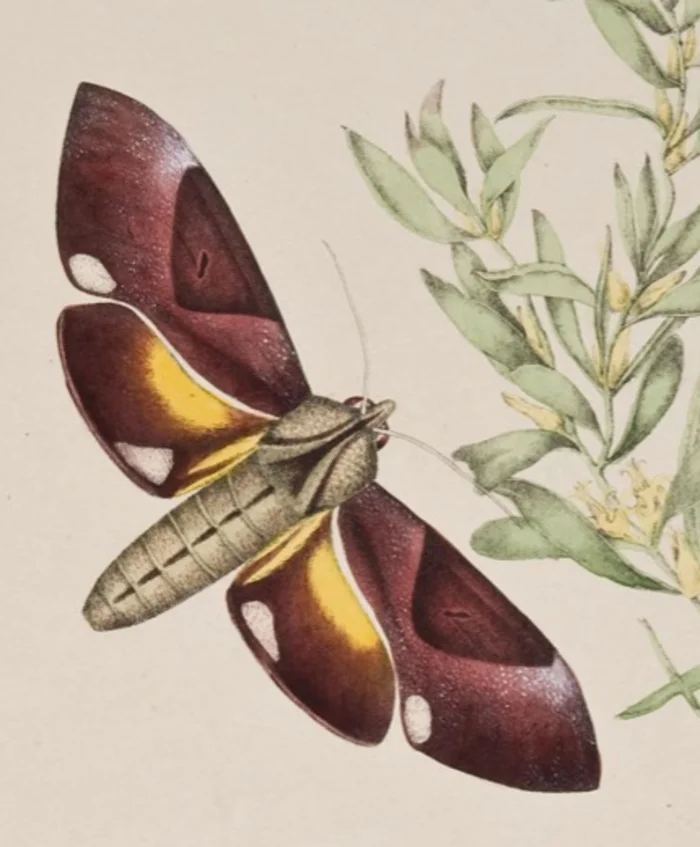
A hawk moth in wine-red and gold, wings spread the way a pinned specimen never quite sits. The sisters bred their specimens rather than just collecting them, so they could paint the living insect. William Swainson reviewed their work in the Sydney Morning Herald in August 1851: “these drawings are equal to any I have ever seen by modern artists… The force of painting can no further go.”
The host plant
No moth floats on white paper. Each species is painted on the plant its caterpillars actually feed on: botany and entomology on one sheet. That botanical discipline is why, 160 years later, our revegetation lists still lean on Scott records. The Plant Explorer carries the thread.
The caterpillars
Two larvae share the branch: the pale form and the green. The sisters raised broods through every moult, with a microscope on the bench and single-hair brushes for the fine work, recording stages most collectors never saw.
The country behind it
Below the branch, a wash of coastline. The sisters set their specimens against the places they belonged to: headlands, rivers, scrub. Twenty years of their lives belonged to this island in the Hunter.
The pupa
The banded pupa lies along the plate's foot: the stage between the caterpillars above and the moth in flight. A complete transformation on a single sheet, which is exactly what the book's title promised.
The working parts
Numbered anatomical figures finish the plate: antenna, leg, mouthparts. This is what made the work science as well as art, and why in 1864 the Entomological Society of NSW elected both sisters honorary members, a rare tribute for women of their day.
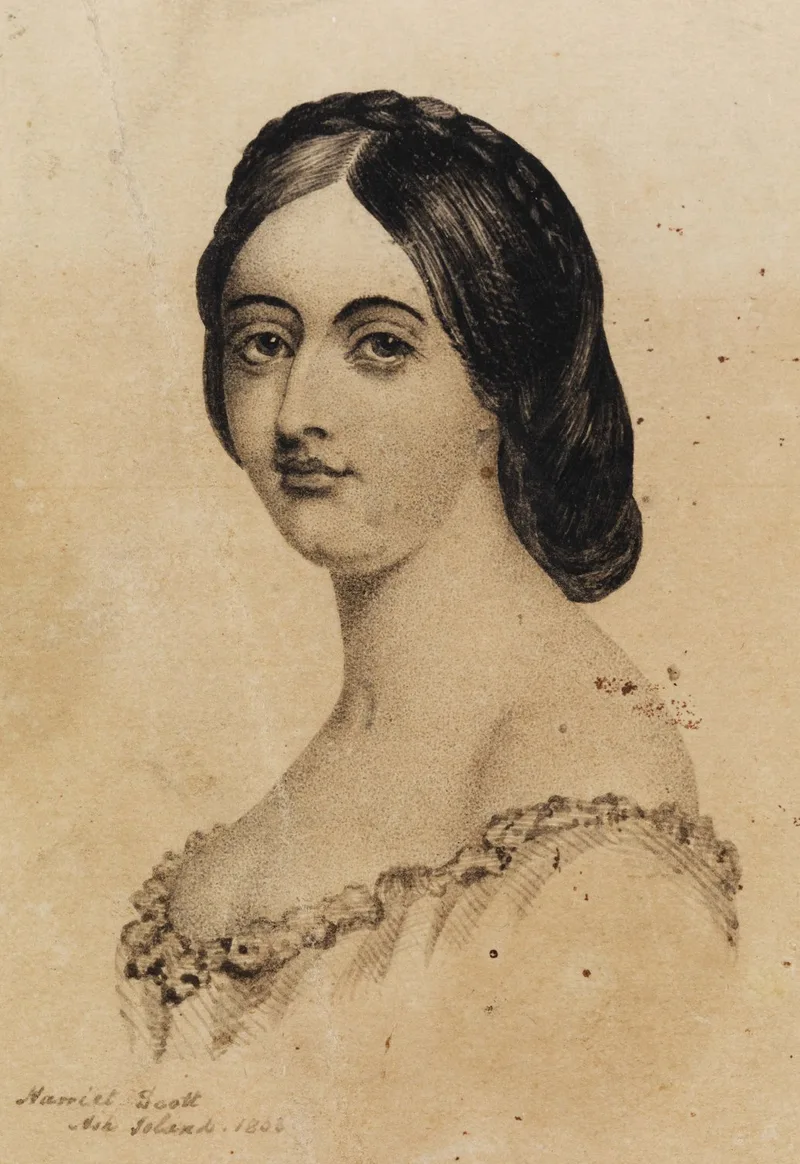
Portrait inscribed “Ash Island, 1853”
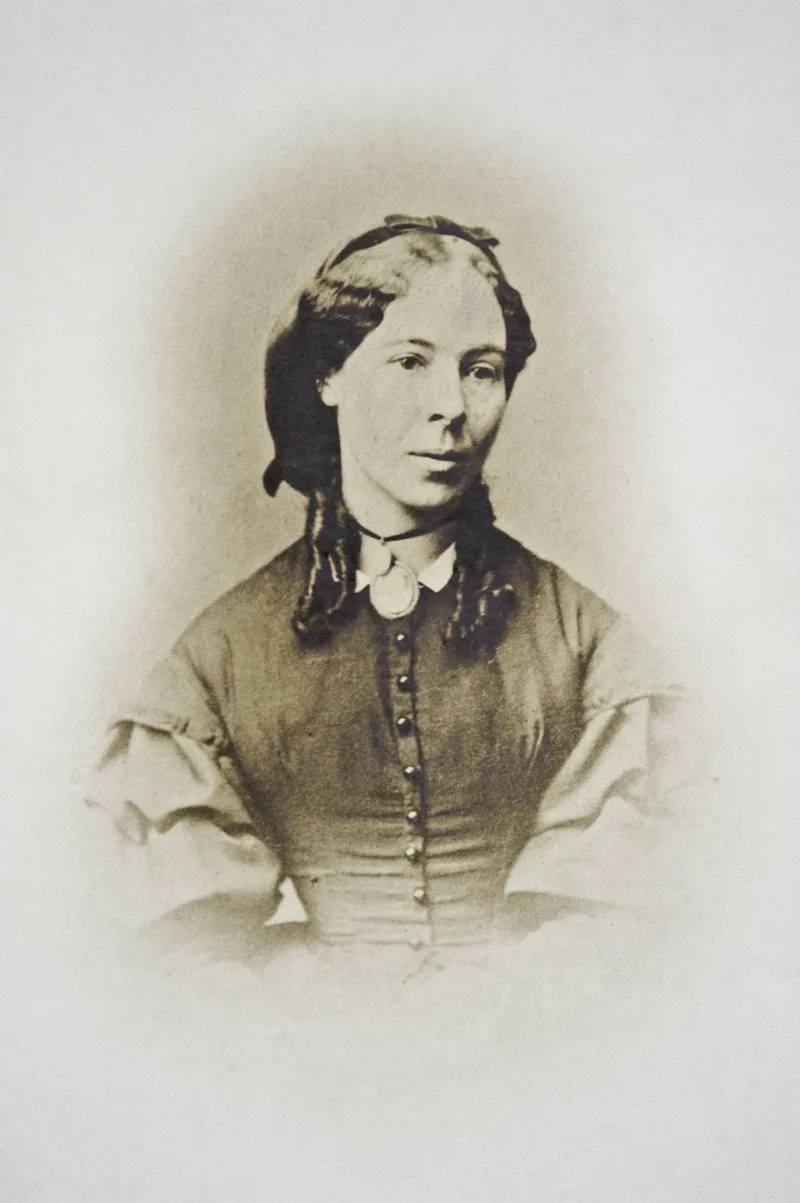
Portrait photograph
Harriet (born 1830) and Helena (born 1832) were the daughters of Alexander Walker Scott (entomologist, entrepreneur and Australian Museum trustee) and Harriet Calcott. In 1846 the family moved permanently to A.W. Scott's Ash Island estate, 2,560 acres granted in 1829: a naturalist's paradise of rainforest, swamp and river flat.
Tutored by their father, the sisters spent twenty years recording and painting the island's plants, insects and animals. Their most famous work, Australian Lepidoptera and Their Transformations, was essentially complete by 1851, when they were about 21 and 19, and published in London in 1864.
“Oh! You cannot think how thankful I am that my dear father allows me to place my name to the drawings! It makes me feel twice as much pleasure while painting them.” Helena Scott, letter to Edward Ramsay, October 1862
The commissions that kept a family
1866 was the family's terrible year: their mother died, Helena's new husband Edward Forde died of fever on the Darling River survey, A.W. Scott was declared bankrupt, and Ash Island was sold. The sisters supported the family from Sydney on commission work, and for years they drew almost all the artwork for the scientific literature produced in Sydney.
They illustrated Cox's Monograph of Australian Land Shells (1868), Krefft's The Snakes of Australia (1869) and The Mammals of Australia (1871), and designed some of the first commercial Australian Christmas cards (1879–80).
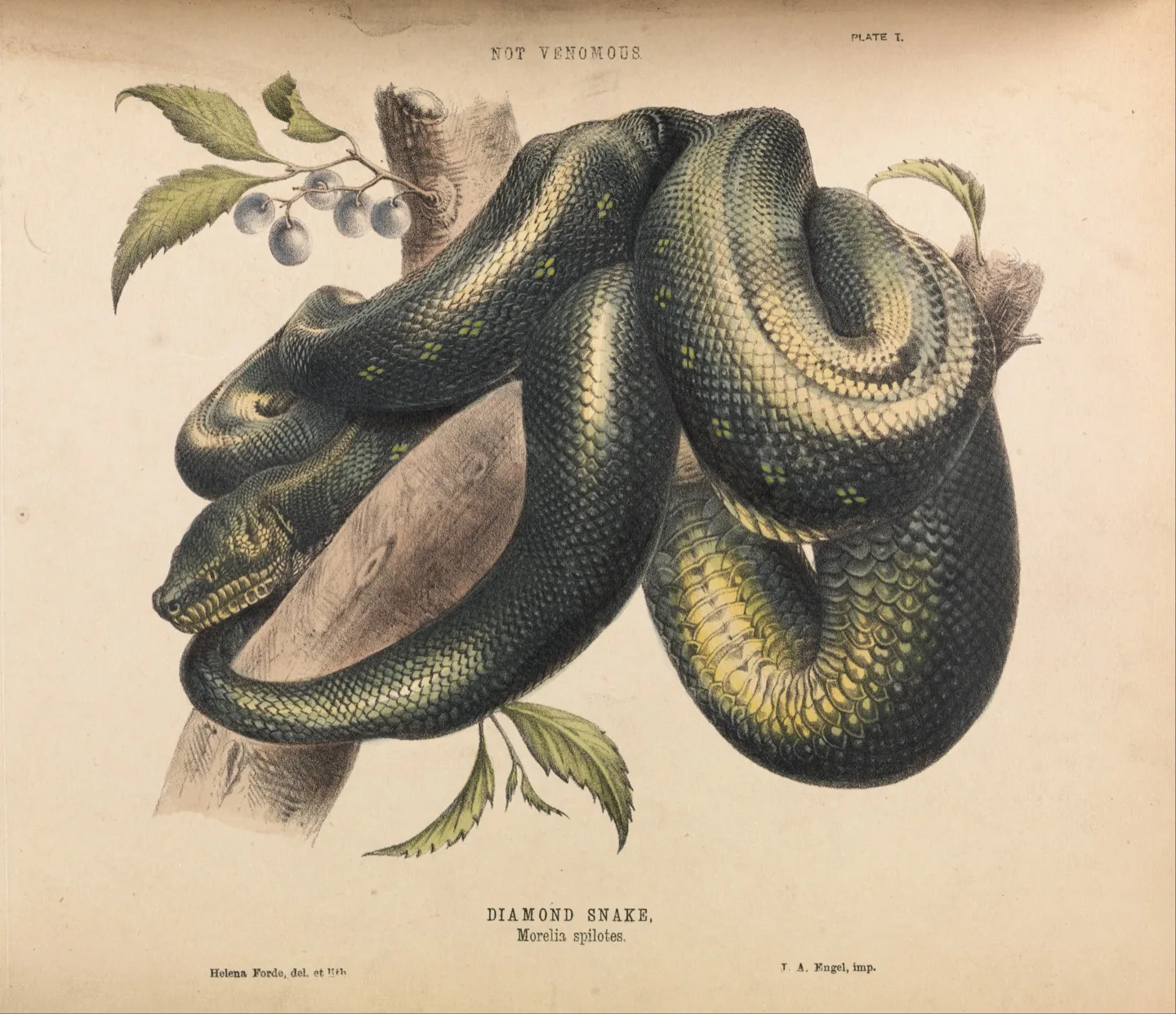
Helena Forde, del. et lith. · Krefft's The Snakes of Australia, 1869
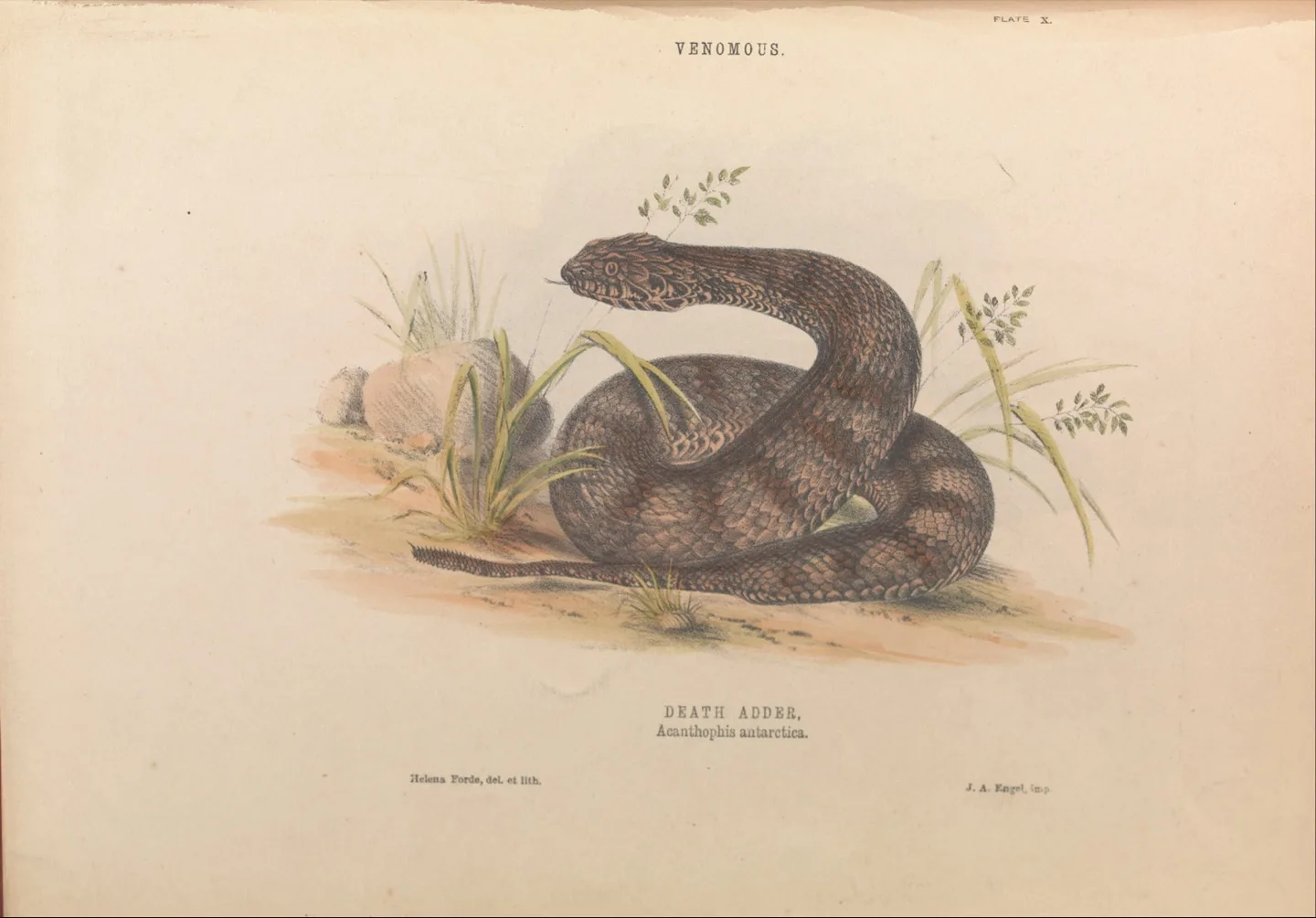
Helena Forde, del. et lith. · Krefft's The Snakes of Australia, 1869
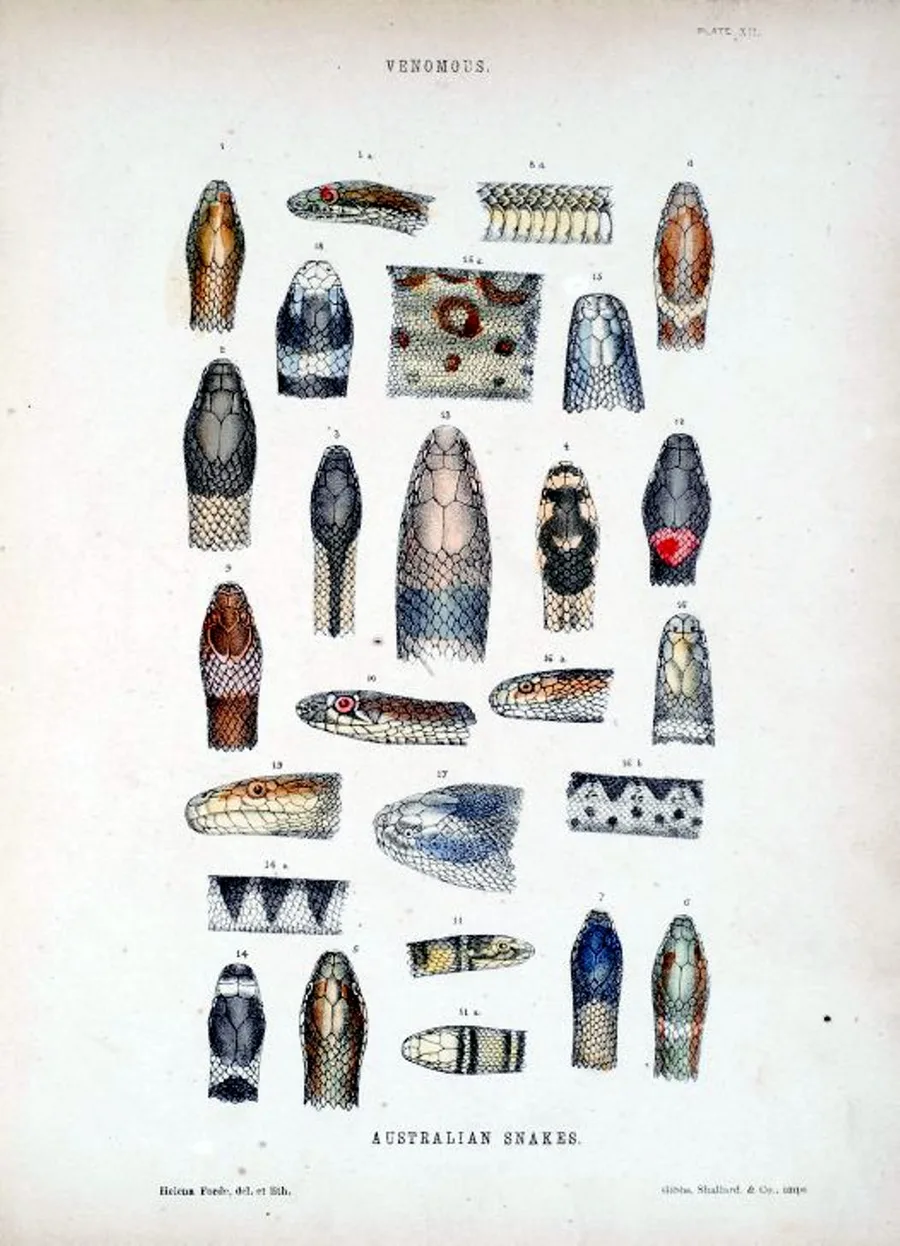
Helena Forde, del. et lith.
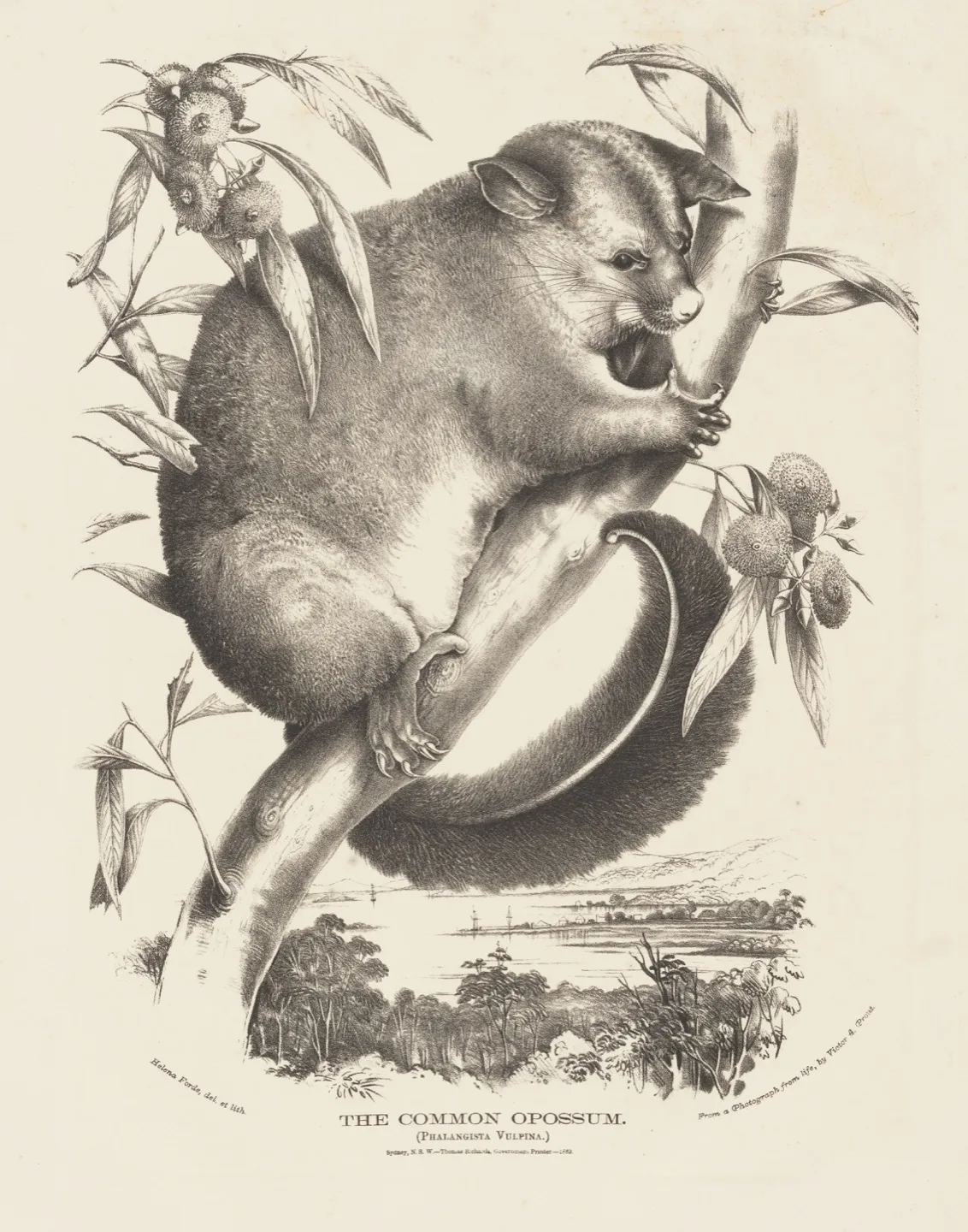
Helena Forde, del. et lith., 1869 · “From a Photograph from life, by Victor A. Prout” (inscription on work)
Drawn from life, printed for science
The possum plate carries its method in its own margin: drawn from a photograph from life, then lithographed by Helena's hand. The sisters worked at the exact seam where colonial art became colonial science.
Helena later persuaded the Australian Museum to publish Australian Lepidoptera Volume 2, issued in five parts between 1890 and 1898. Harriet died in 1907; Helena in 1910. Her Sydney Morning Herald obituary called her “the last of the artist naturalists”.
No descendants, an enduring legacy
The Scott cousins carried the family's mark well beyond natural history: Rose Scott became one of Australia's leading suffragists, and David Scott Mitchell's collection founded the Mitchell Library. As our history pages put it, none left descendants, but all left an enduring cultural, social and artistic legacy.
The sisters' own legacy is planted in the ground here. Their plant lists and paintings are the working reference, an invaluable blueprint, for the vegetation being replanted across Ash Island today.
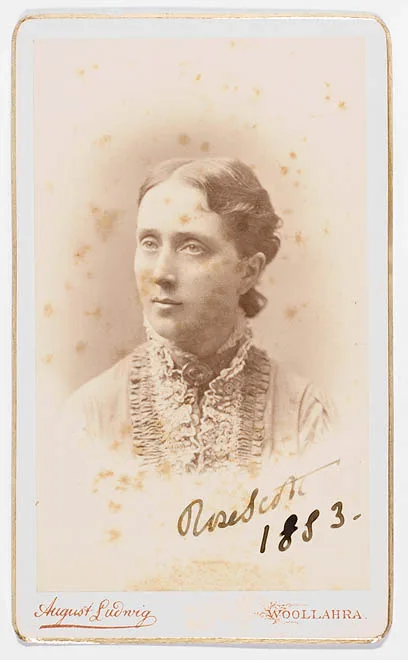
Photograph, 1883
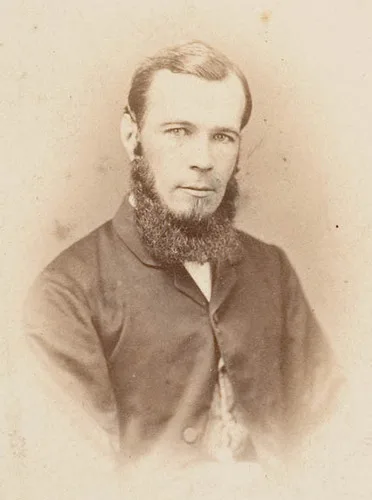
Portrait photograph
A small gallery, close enough to touch
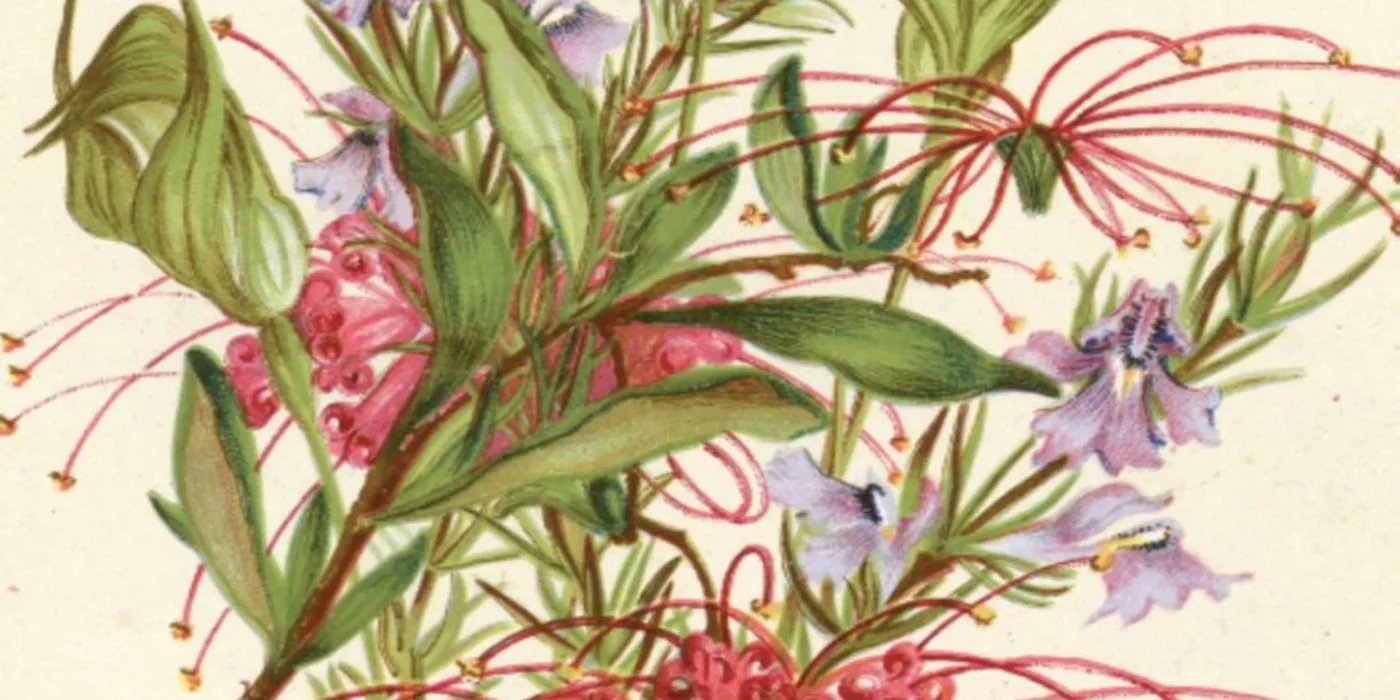
Click any plate to enlarge it. The moths are mostly Harriet's, the butterflies mostly Helena's; each carries its signature line.
“From Nature & On Stone by Helena Scott”
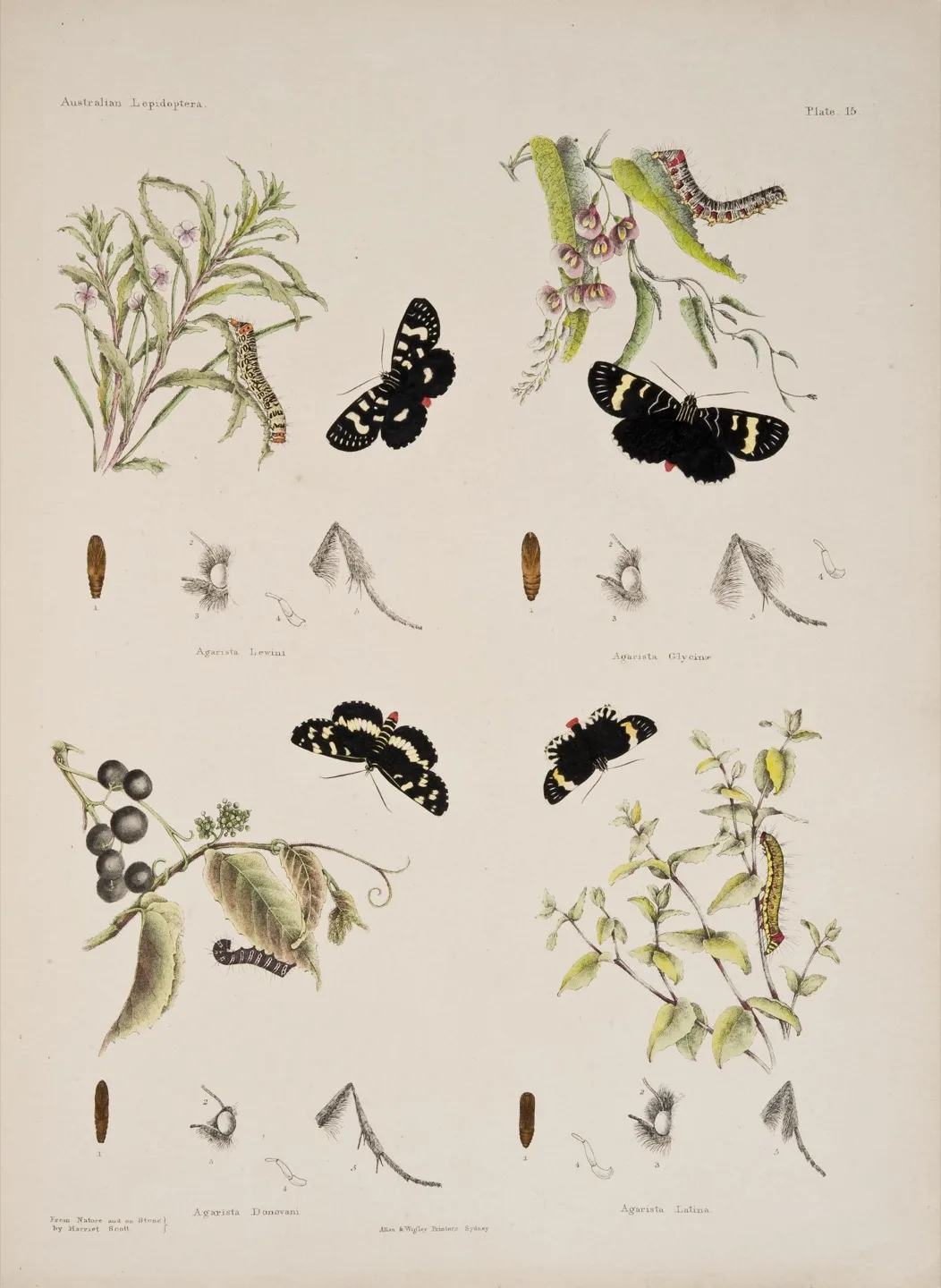
“From Nature and on Stone by Harriet Scott”
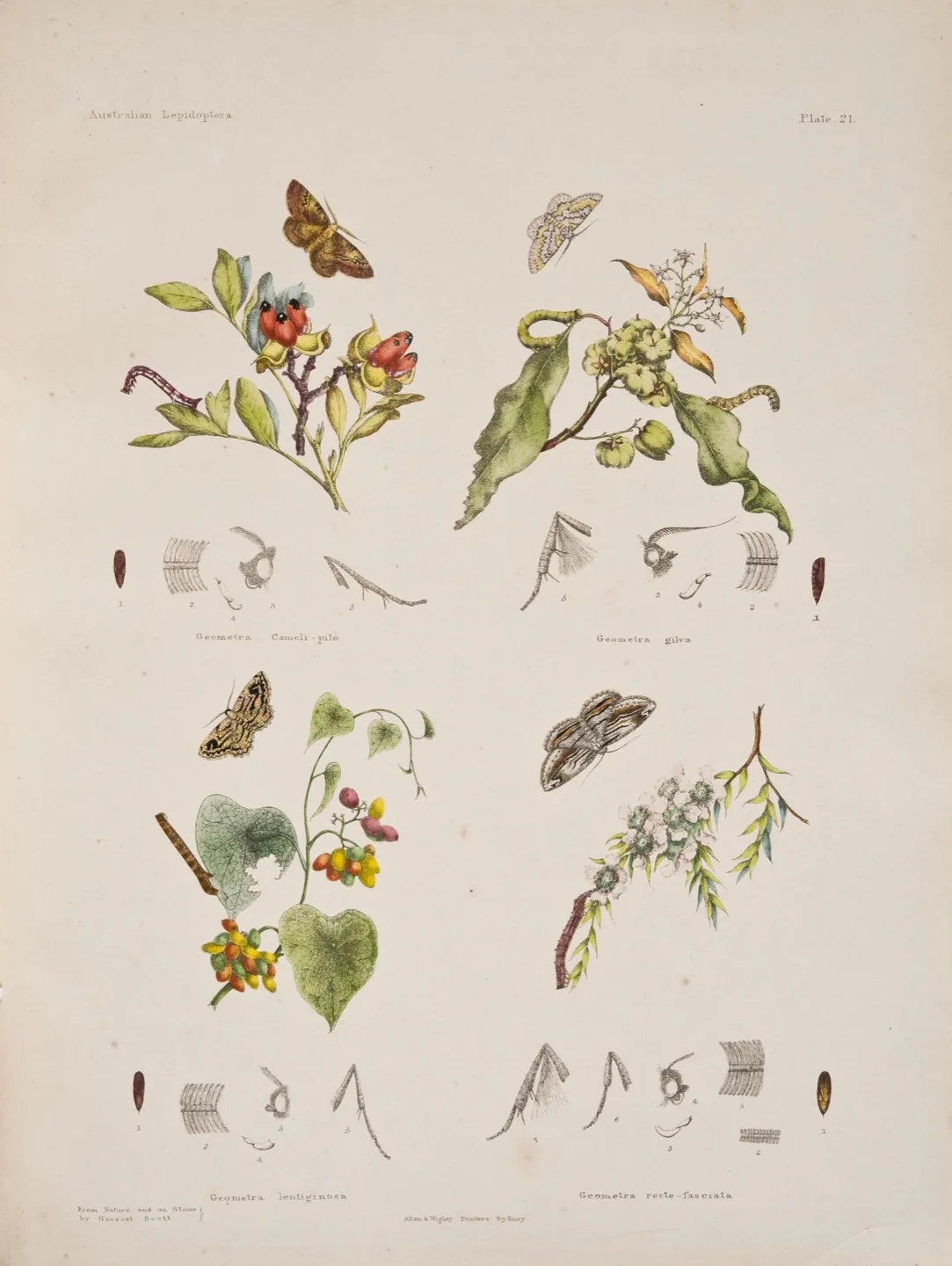
“From Nature and on Stone by Harriet Scott”
Scott sisters · from our own collection scans
Sources & further reading
The Scott pages in our history archive were researched and written by Cherylanne Bailey (2019); with Catie Gilchrist's account (2015) reproduced from the Dictionary of Sydney; and a study by Dr Anne Llewellyn, University of Newcastle. Their credits travel with every reuse of this material.
- The Australian Museum's Scott Sisters collection · the Museum holds the sisters' original artwork and digitised the Lepidoptera plates.
- Hunter Living Histories: The Scott Sisters of Ash Island · University of Newcastle.
Ask us about visiting, volunteering or the island's history
We're a small volunteer team at the Schoolmasters House. Send your question through and we'll reply as soon as we can.