The Schoolmasters House, Ash Island
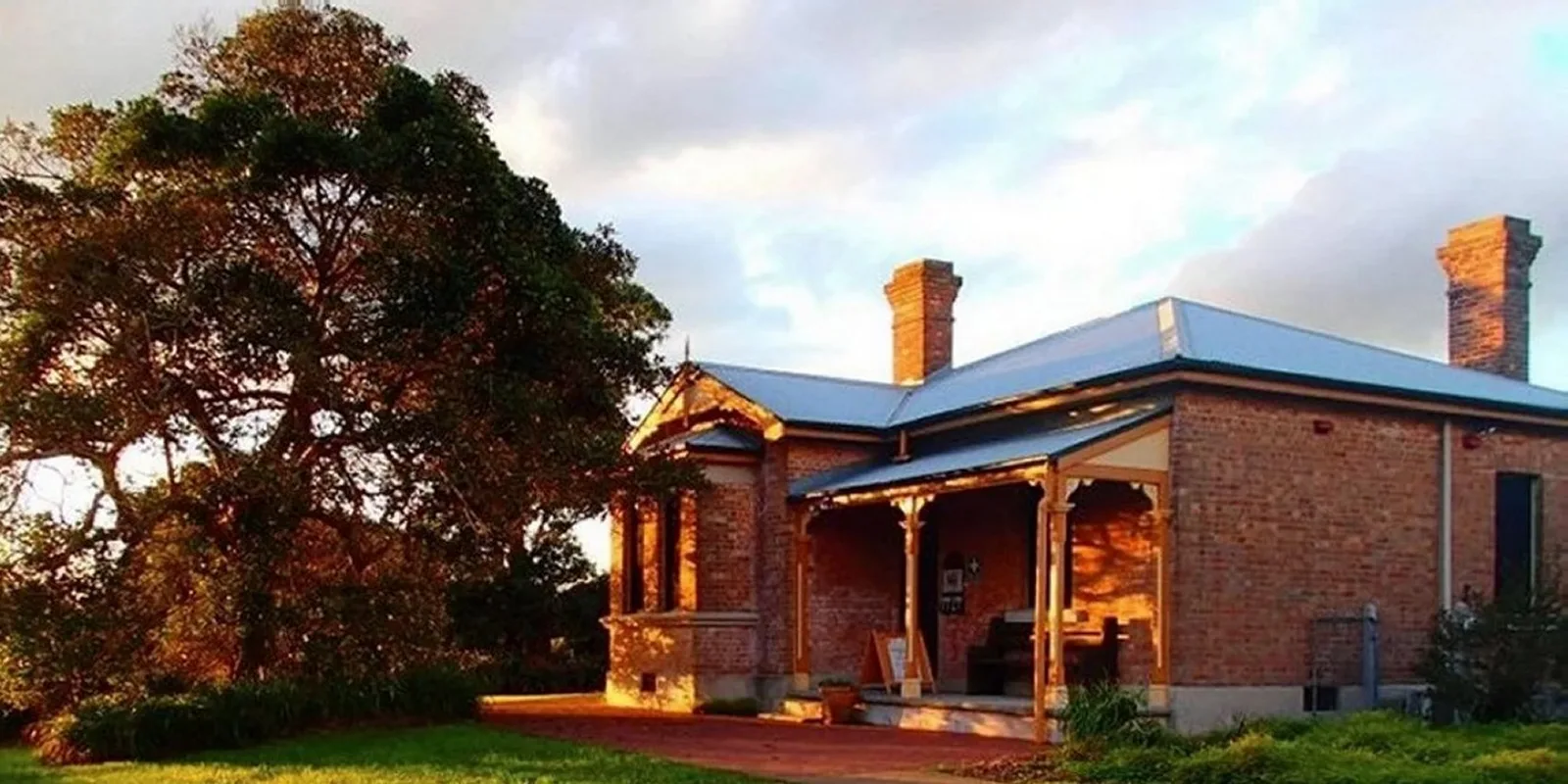
Golden hour on the verandah · FOTSH archive
The Schoolmasters house has local heritage significance. It was built in the mid 1890s to house the schoolmasters who administered and taught at the Ash Island Public School, located a short walk to the west. The house has stood through floods, been the home for many tenants, and during World War II was leased by the RAAF. Sturdily built of double brick, the house has Baltic pine ceilings, tallowwood floors, cedar doors and windows, and three marble fireplaces.
Significantly, it is the last of the buildings on the islands in the estuary still standing on its original footprint. When the last tenant left the house in 1997 it underwent restoration to return to its near original condition. For over 20 years it was the administration and information centre for the Kooragang Wetland Rehabilitation Project. The Friends of the Schoolmasters House took over the lease on July 1st, 2018.
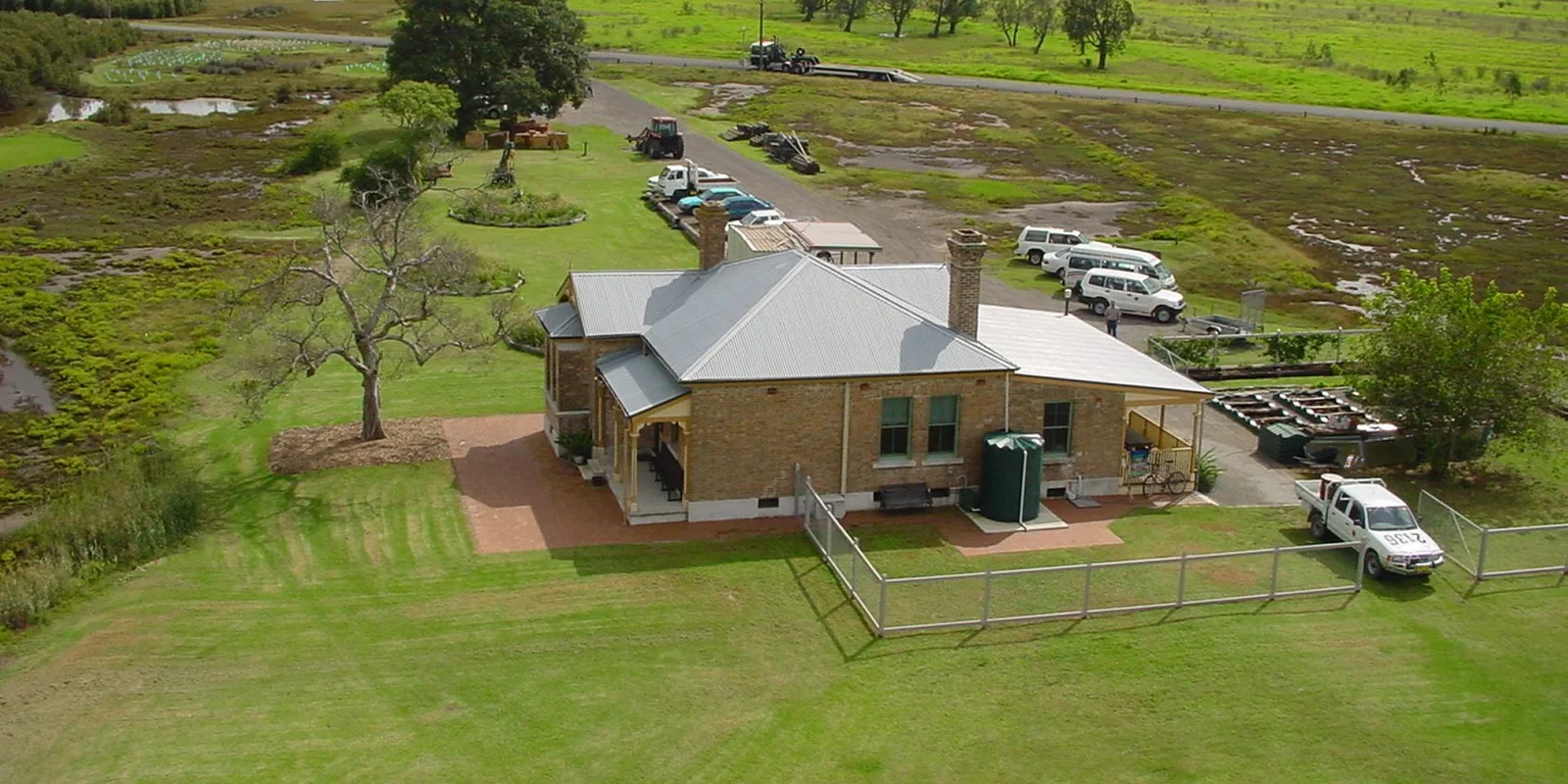
The house amid the wetland · KWRP archive
Why “original footprint” matters
Every other building on the estuary islands has gone: flooded out, resumed, demolished or moved. This one held its ground through the floods, the great 1955 flood among them, the resumptions and the reclamation years. When you stand on the verandah, you're standing exactly where the island's schoolmasters stood in the 1890s.
Today the house is our home base: the library, the scanning bench, the garden and the kettle.
The school it served
The Ash Island Public School stood a short walk west of the house, teaching the children of the island's seventeen dairies. In 1886 the District Inspector counted 62 children of school age on neighbouring Moscheto Island alone.
The class of 1933 posed for the photograph shown here; our volunteers set the print against the house's verandah, where their teacher would have walked home.
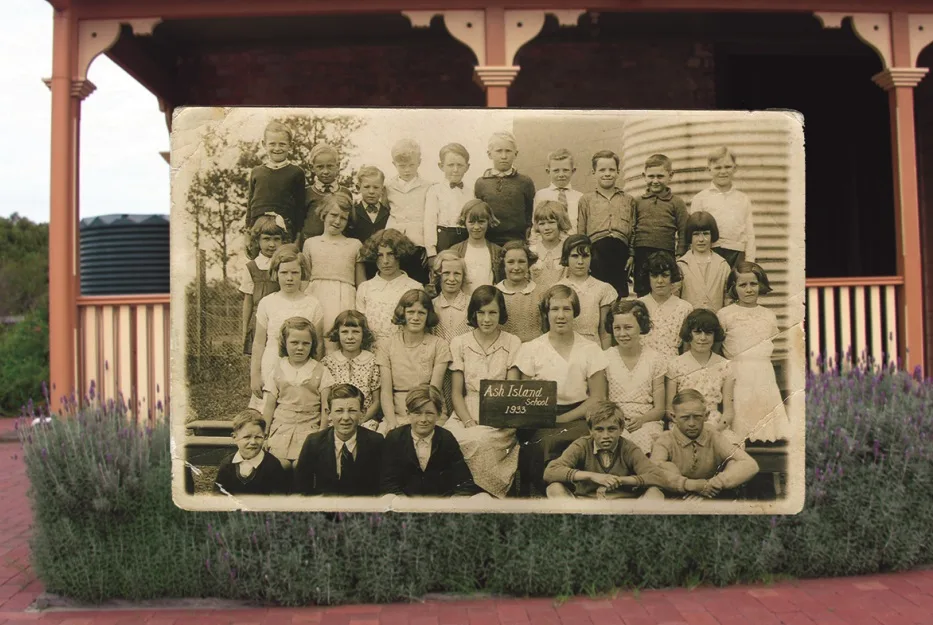
Class photograph over the verandah · our composite, FOTSH archive
What the KWRP and volunteers took on
When the last tenant left in 1997, the house was a working farmyard: duck yards at the door, timber stacked in the grass, chooks in the skillion. The KWRP project archive photographed all of it. No captions were ever published with these frames, so we caption only what you can see.
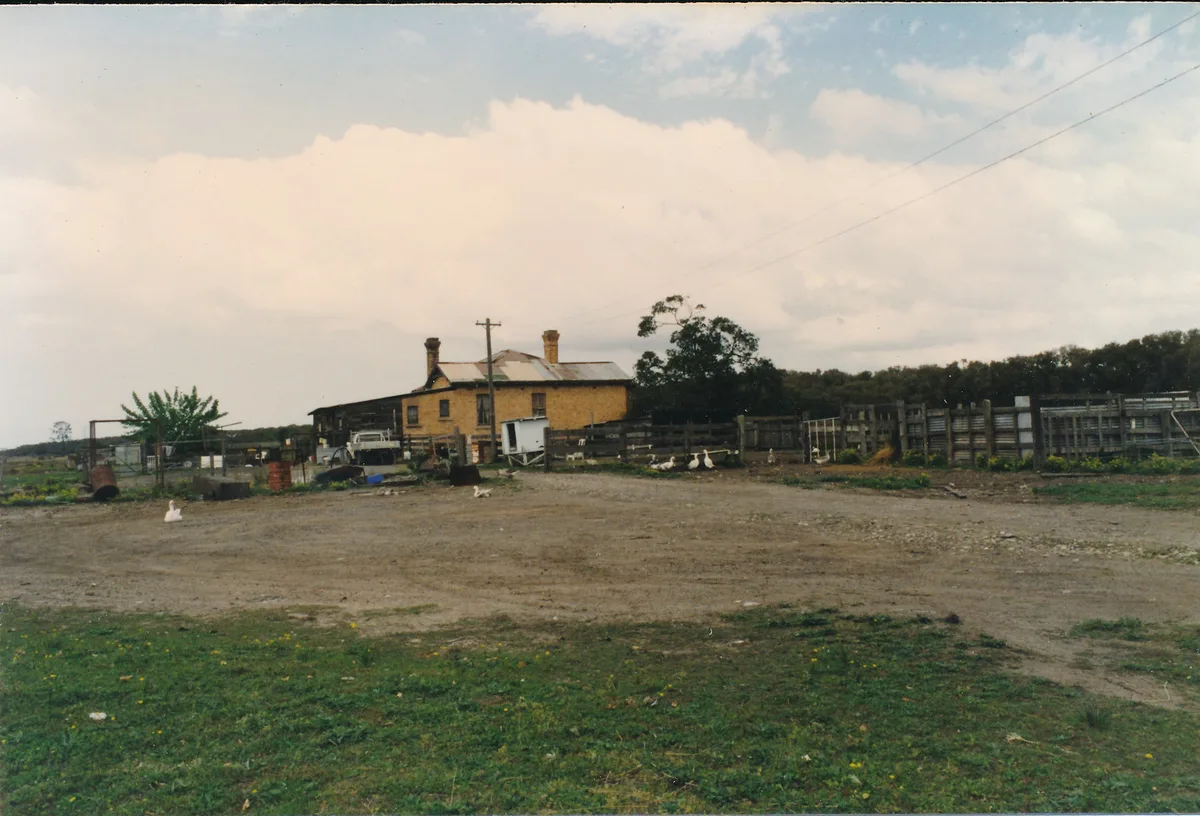
Duck yards at the door · KWRP archive
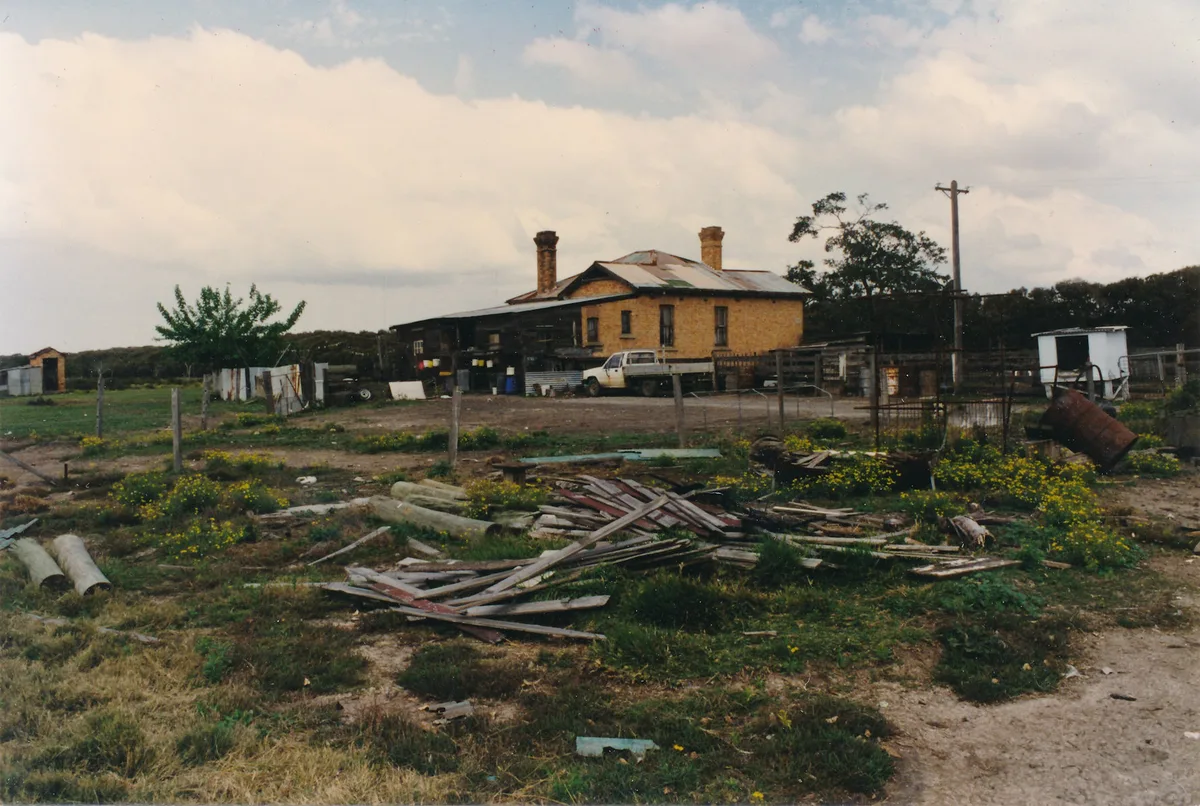
Timber in the yard · KWRP archive
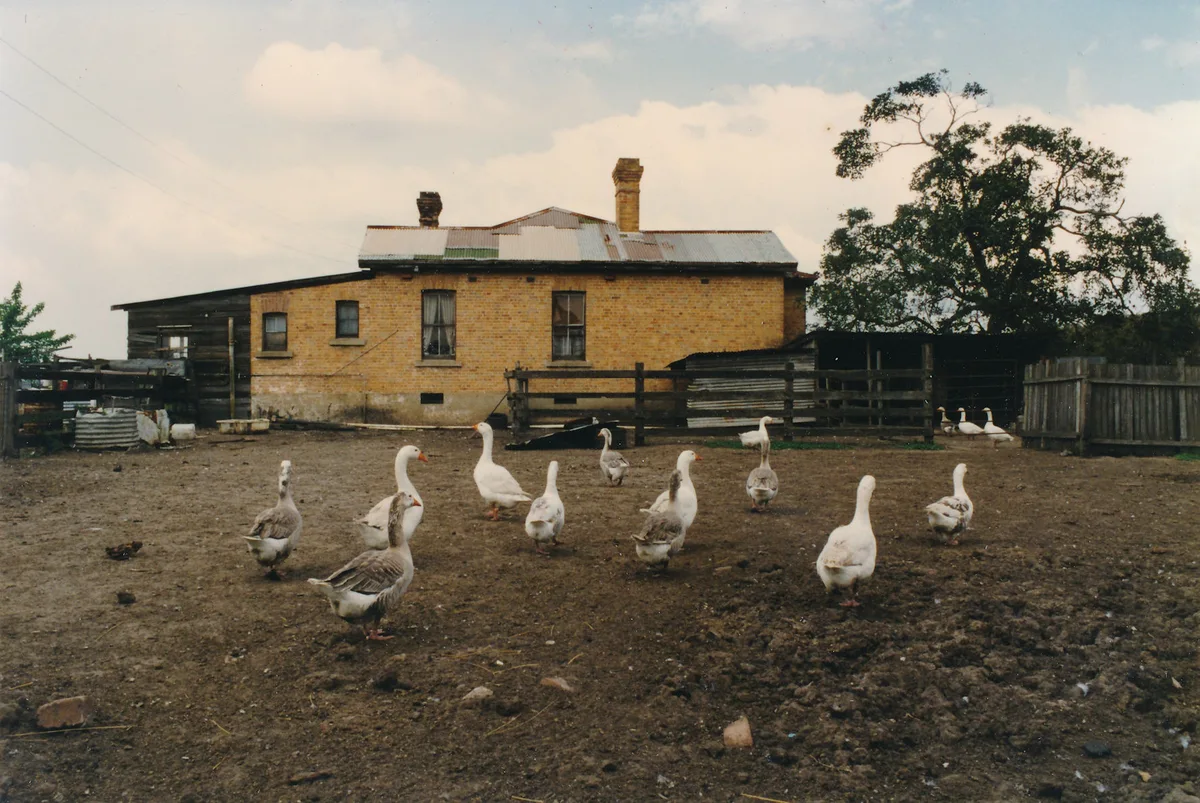
Geese at the rear · KWRP archive
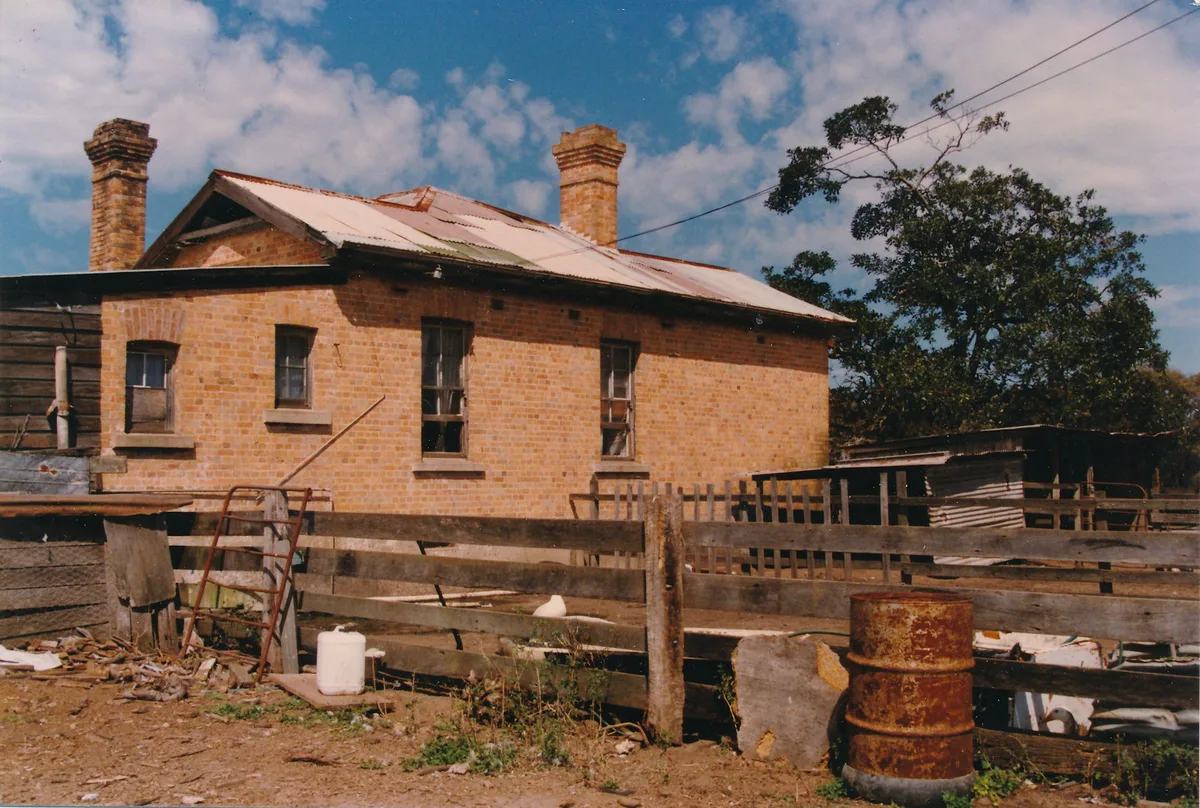
The skillion and the chook run · KWRP archive
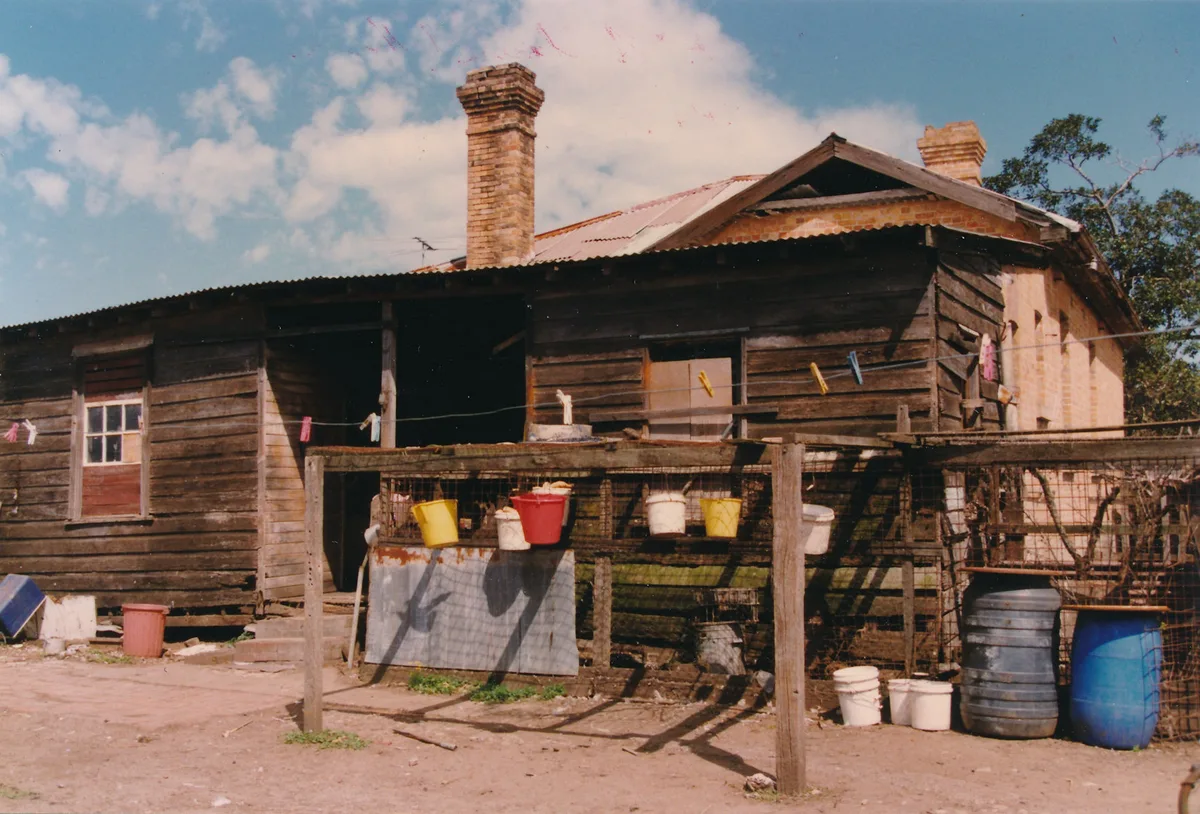
Buckets on the wire · KWRP archive
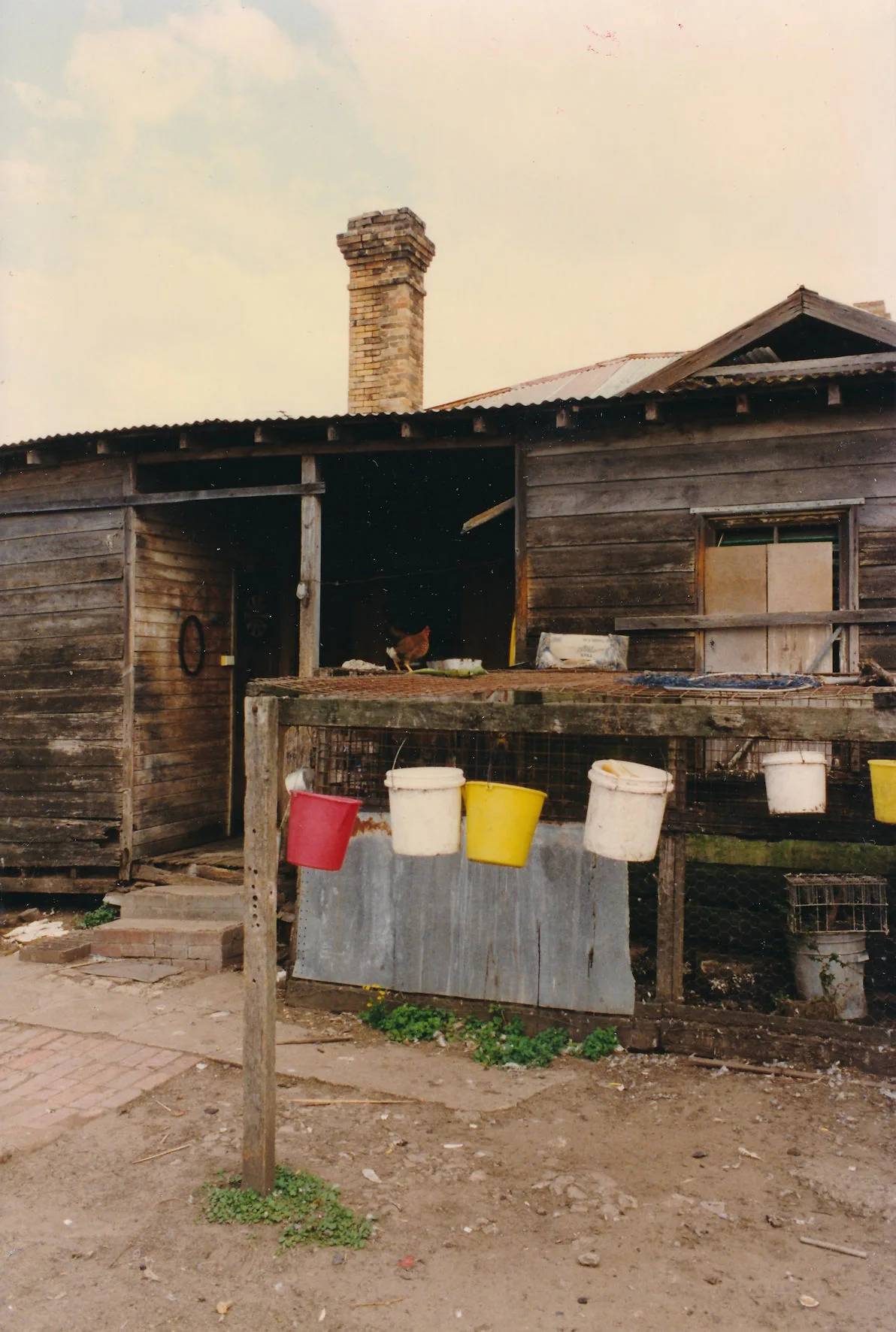
The chimney stands · KWRP archive
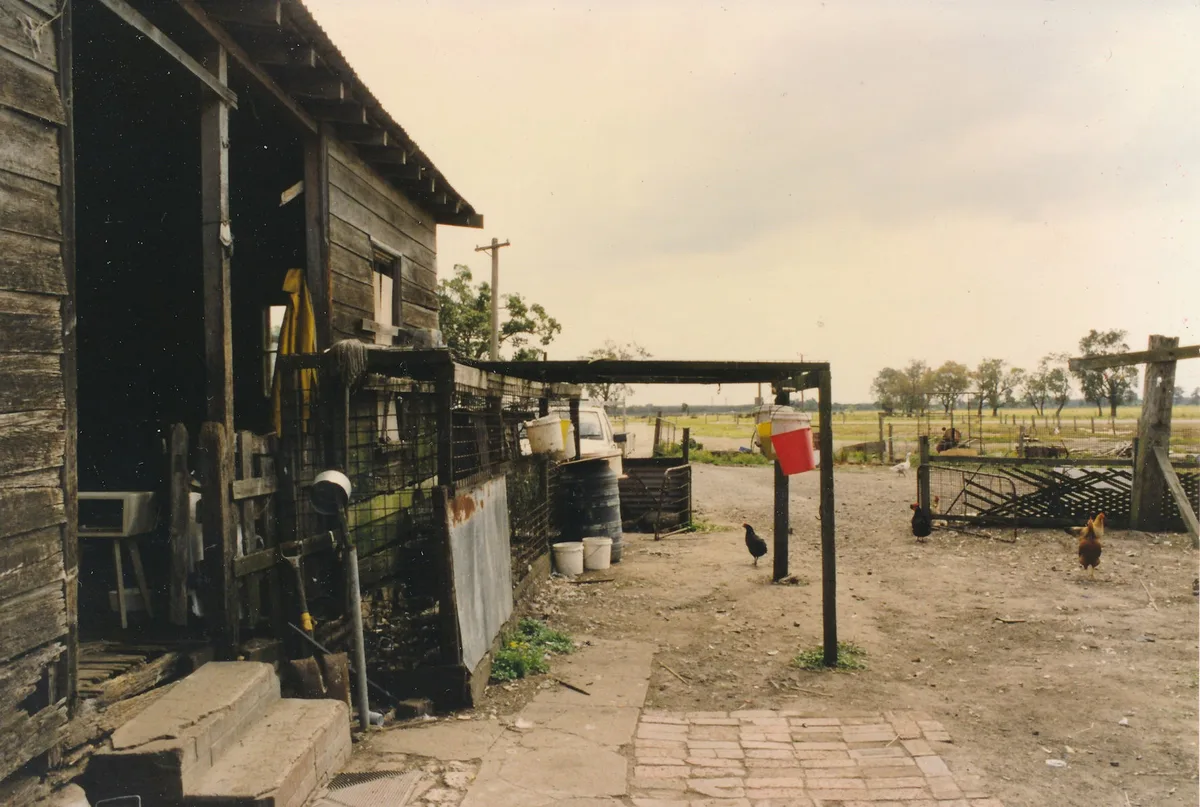
The working yard · KWRP archive
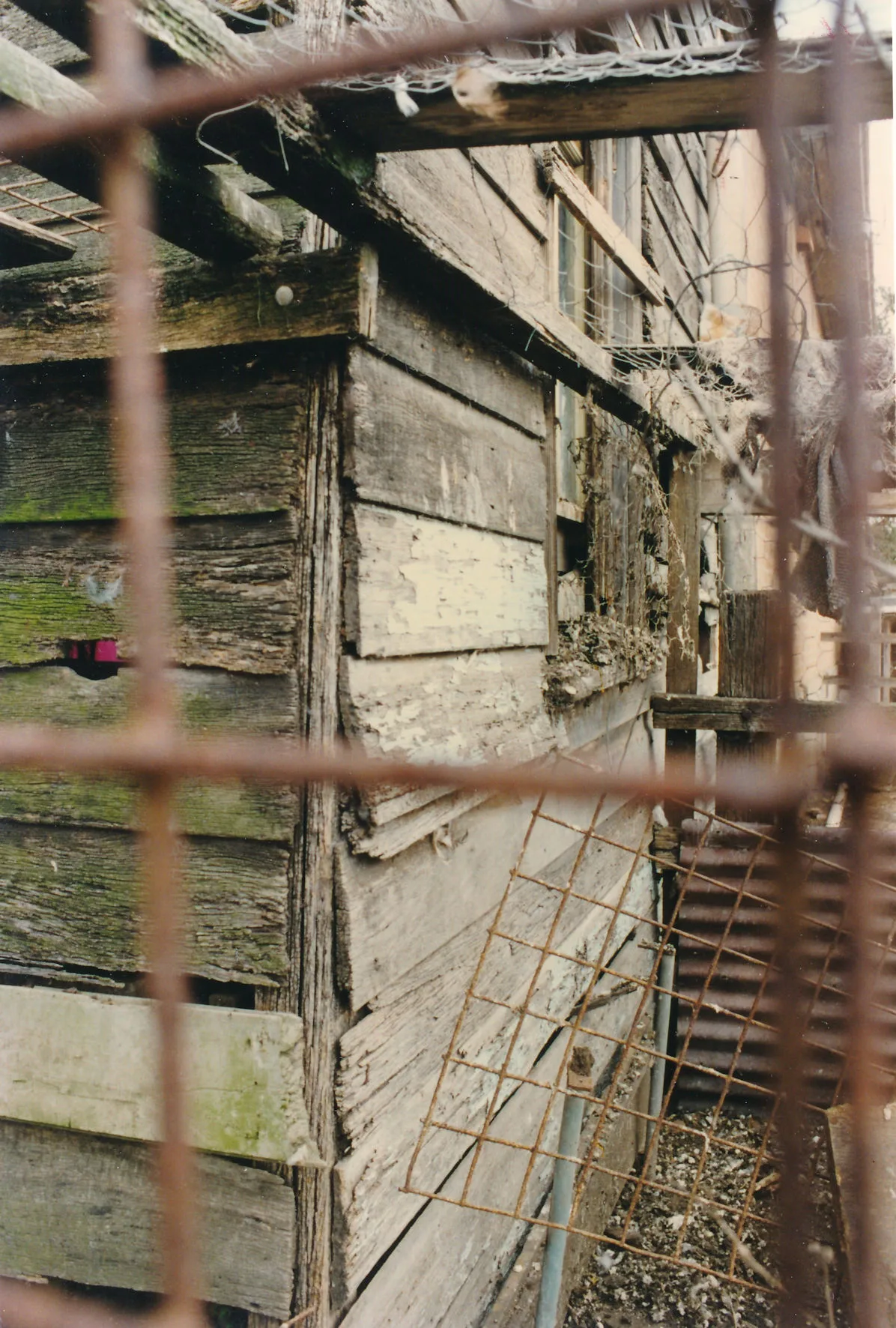
Weatherboard through the mesh · KWRP archive
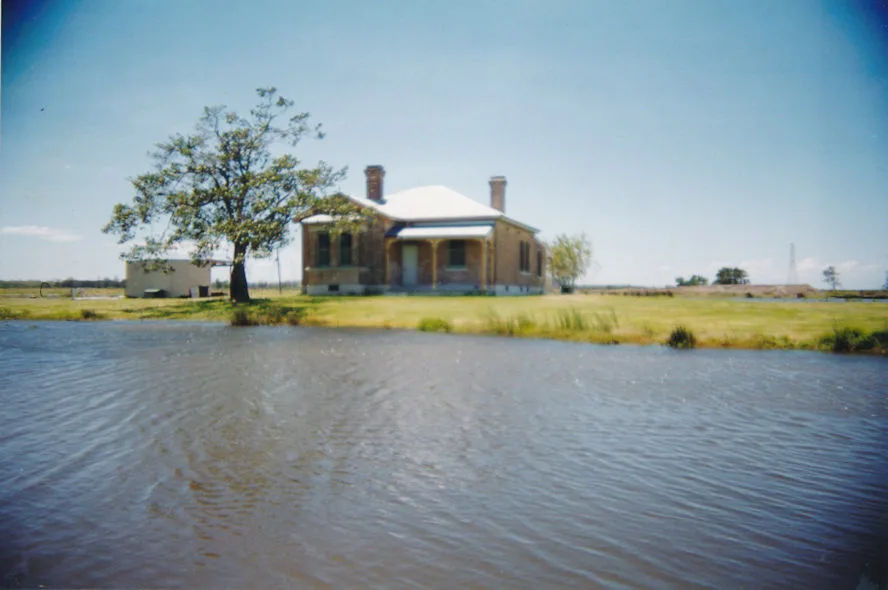
Floodwater around the house, 1990s · KWRP archive
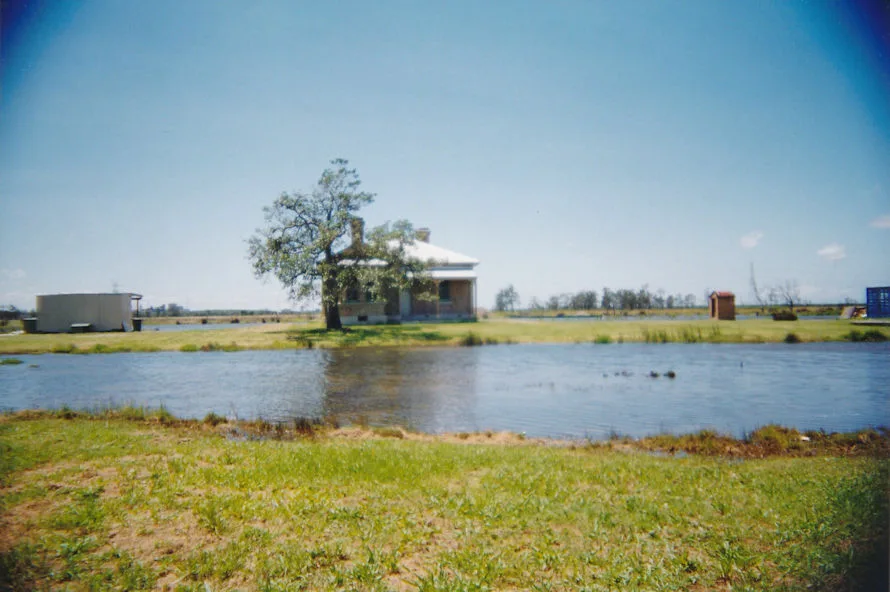
The same water, wider · KWRP archive
And the after
Three years of volunteer work returned the house to near-original condition. The golden-hour photograph below is the same building as every frame above: same bricks, same chimneys, same footprint.
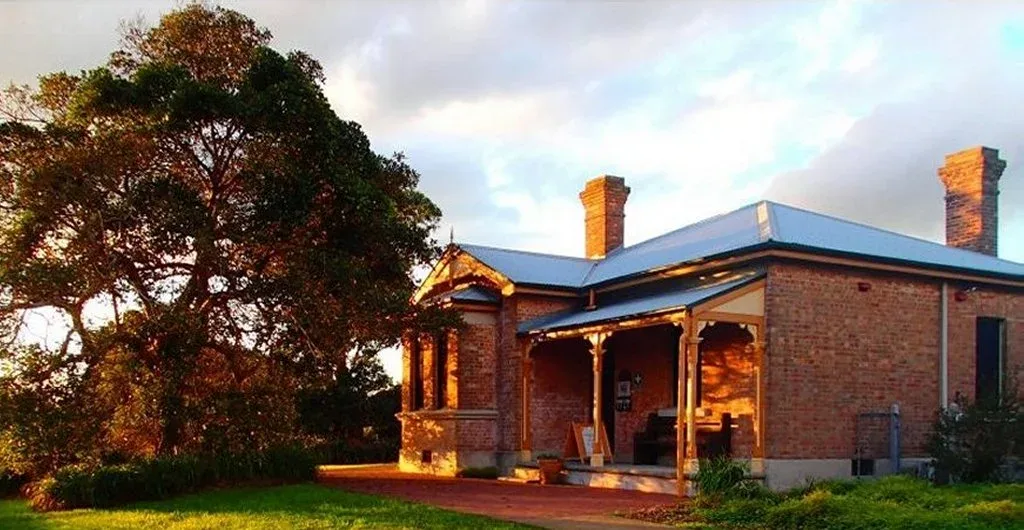
The house today · FOTSH archive
The 131 Radar igloo
The island's WWII radar station left behind its concrete igloo operations room. In 1995 it got its own volunteer restoration, recorded in the same project archive. The station's story is on the timeline, and the full article, courtesy of radarreturns.net.au (editor Morrie Fenton), is in our library (PDF).
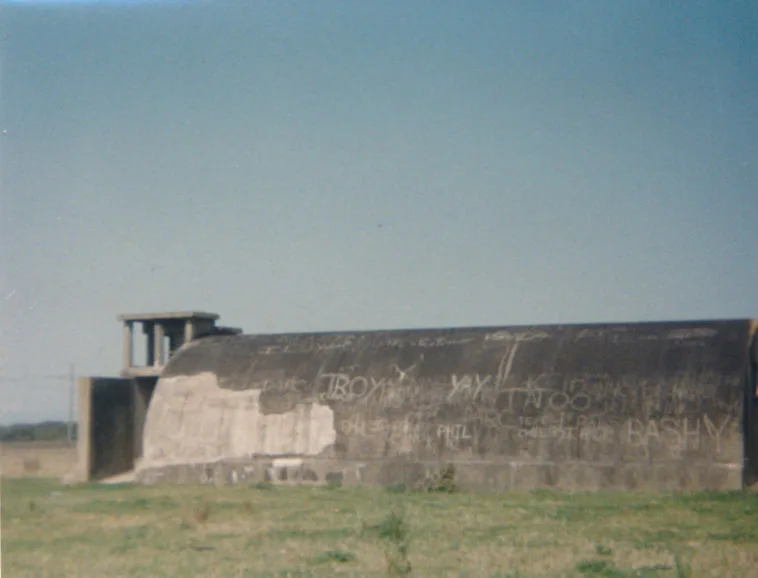
The igloo, graffitied, 1995 · KWRP archive
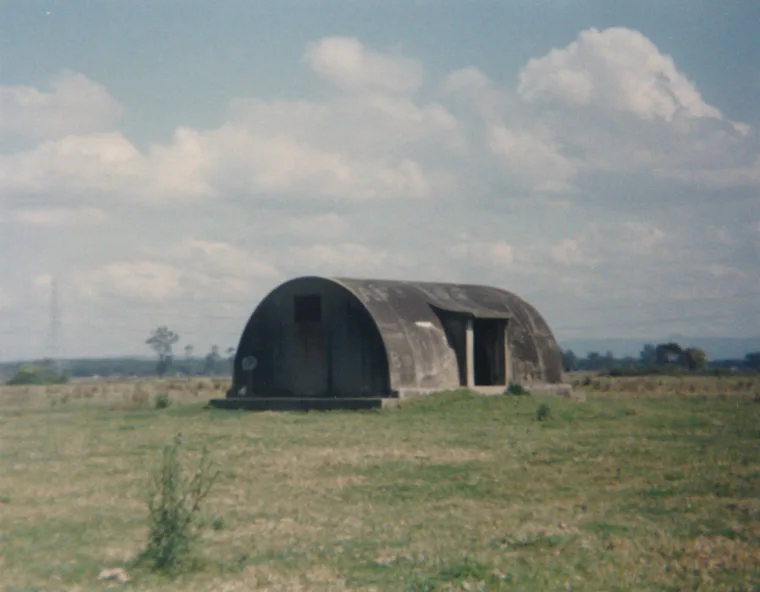
On the flat · KWRP archive
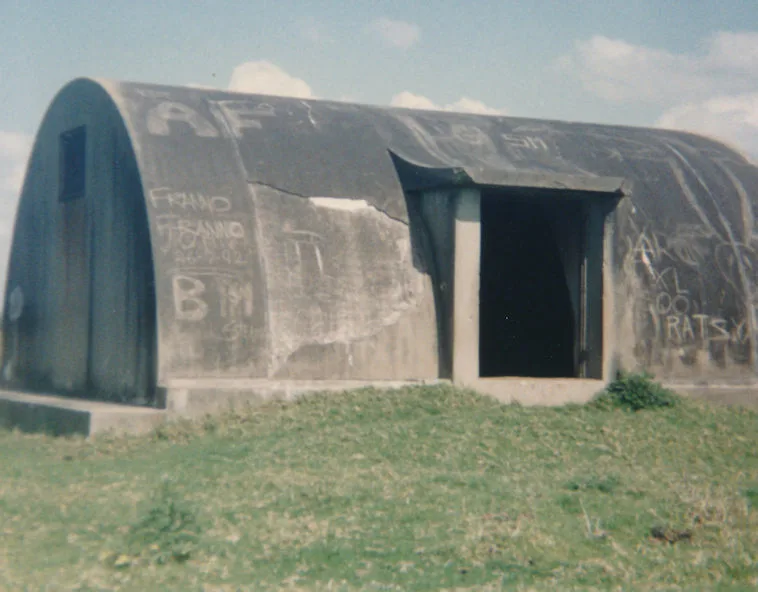
The entrance · KWRP archive
“The Schoolmasters House library is a huge resource for school and university students and academics too.” From our published pages
Ask us about visiting, volunteering or the island's history
We're a small volunteer team at the Schoolmasters House. Send your question through and we'll reply as soon as we can.